Walk into bustling streets of Unga LTD to the newer developments in Mateves. Ask a child last time they’ve climbed a tree, a name of a bird they’ve watched, or the last time they built a kite. You’ll likely get a blank stare. For many children growing up in modern Arusha, these sensations are becoming rare. In the era with more screens, tighter schedules, and expanding urban neighborhoods we have accidentally taken something vital away from our children: unstructured time in nature.
We are raising the first generation of Tanzanian children for whom “nature” is a distant concept something seen on a screen, not felt under bare feet. This isn’t just a cultural shift; researchers call it Nature-Deficit Disorder (NDD), a term coined by Richard Louv (Last Child in the Woods, 2005) to describe the physical and mental health costs of a childhood spent indoors.
As one 4th grader in San Diego famously said, “I like to play indoors better, ‘cause that is where all the electrical outlets are.” The same could now be said of children in Arusha.
Science is Clear: This is a Health Emergency Nature is Not a Luxury, It’s a Necessity
Nature-Deficit Disorder NDD is not a medical diagnosis, but a powerful metaphor. Across decades of research, a clear pattern has emerged: children disconnected from nature suffer more. A 2024 meta review by Lomax. confirmed that nature exposure directly benefits children’s mental health, while its absence is linked to rising rates of anxiety, depression, and attention disorders. While major review by Dr. Frances Kuo found that exposure to nature is linked to everything from reduced childhood obesity to improved immune function and even lower mortality in older adults.
In Wales, a survey of 62 educational professionals found that over 70% believed children today have only minimal knowledge of nature and a weak emotional connection to it. One Welsh teacher noted that before a nature-based project, students couldn’t name common local birds; afterward, they came to school on Mondays excitedly discussing weekend sightings.
But what is the right “dose”? Kuo’s research gives us three simple rules:
- Maximize Minutes: Total time exposed to nature matters most. A view of trees from a classroom window helps, but daily contact is transformative.
- All Forms Help: You don’t need a safari to the Serengeti. A shady backyard, a community garden, or a local park works.
- The Greener, The Better: While small doses help, larger, wilder spaces offer the deepest healing.
But how do we deliver this “Vitamin G” in urban Arusha, where green space is shrinking, screens are rising, and parental fears about safety keep children close to home?
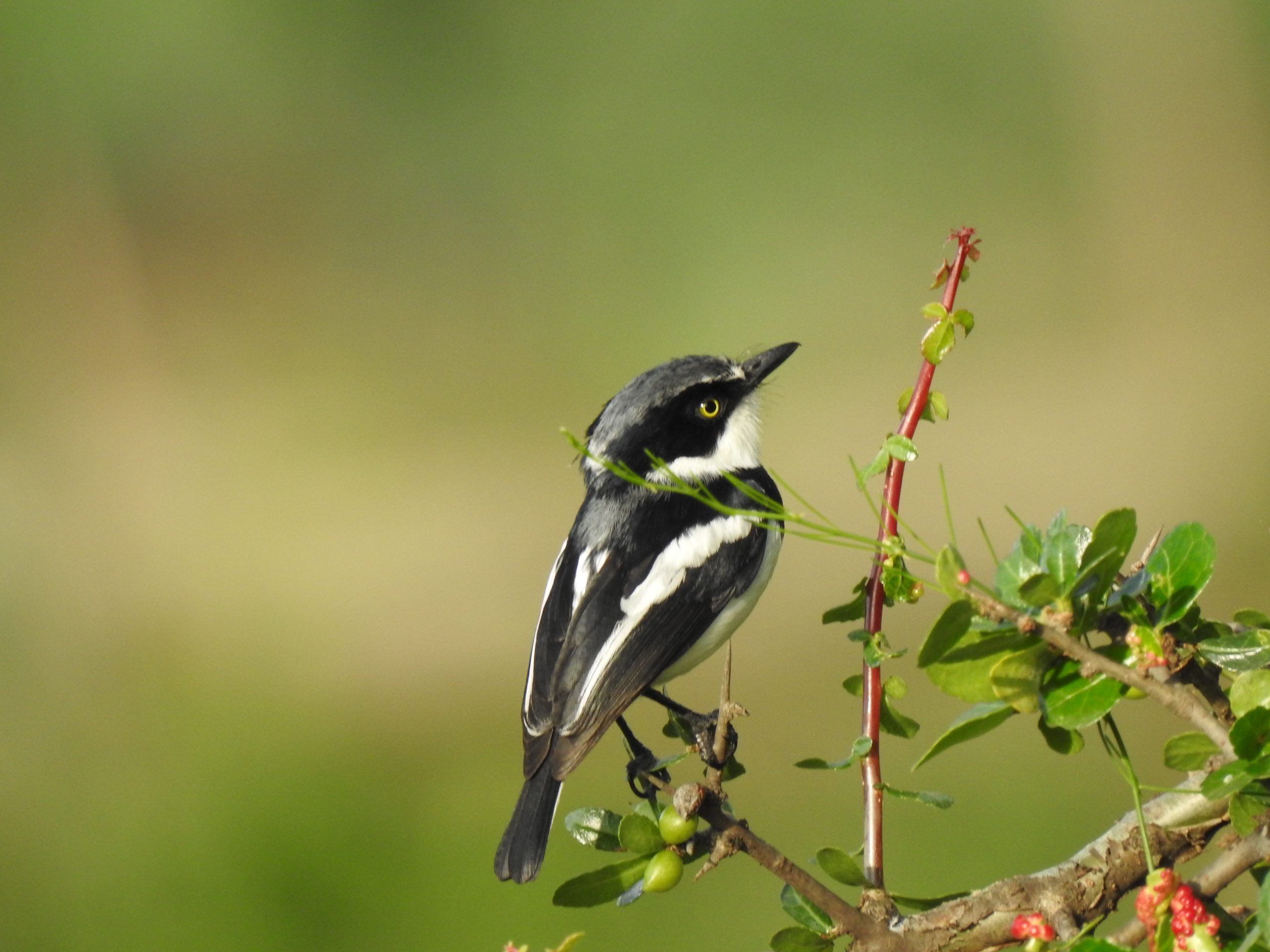
Birds Are the Perfect Prescription
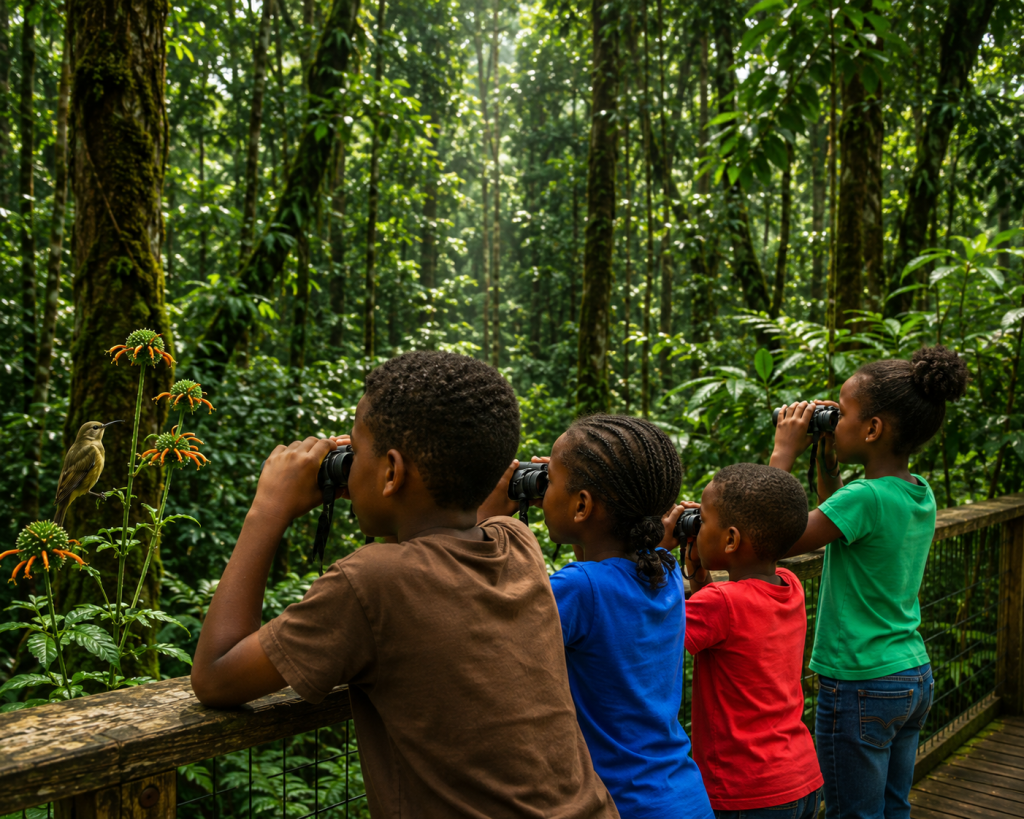
You cannot “prescribe” a forest to a family living in a dense part of Arusha. But you can prescribe birdwatching. Of all the ways to reconnect children with nature, birdwatching is the most accessible, effective, and joyful. Environmental education researchers argue bird-based programs create opportunities for children to slow down, observe, listen, and reconnect with the living world around them. Watching birds encourages patience, mindfulness, and curiosity qualities that are increasingly rare in highly digital lifestyles.
Through guided bird walks, school bird clubs, nest observation, nature journaling, and habitat restoration activities, young people can experience:
- Emotional calm and stress reduction
- Improved concentration and observation skills
- Greater self-confidence
- Teamwork and social connection
- Stronger appreciation for local ecosystems
Environmental education researchers argue that outdoor learning and wildlife-based activities help children reconnect with nature while also supporting academic and personal development.
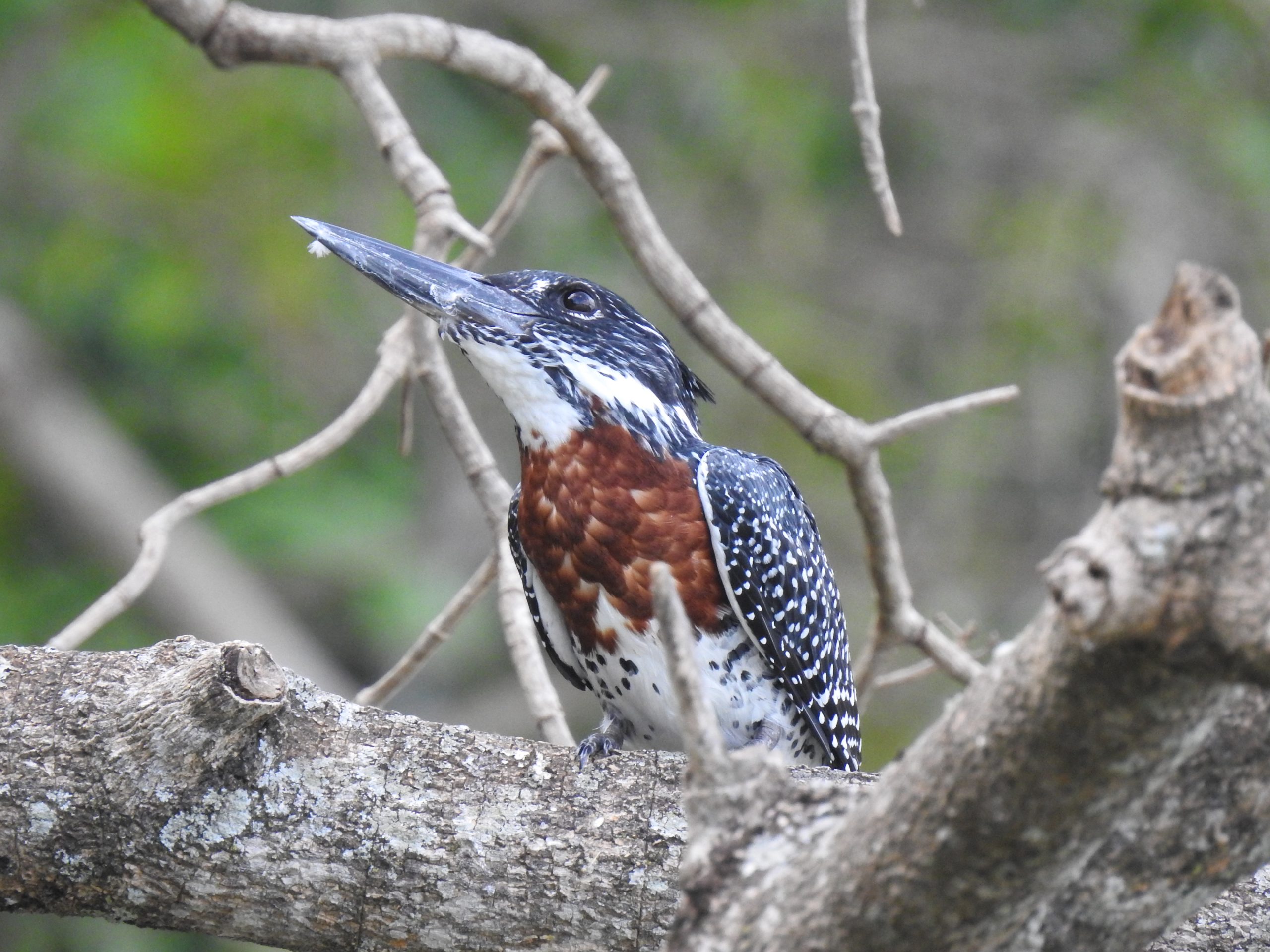
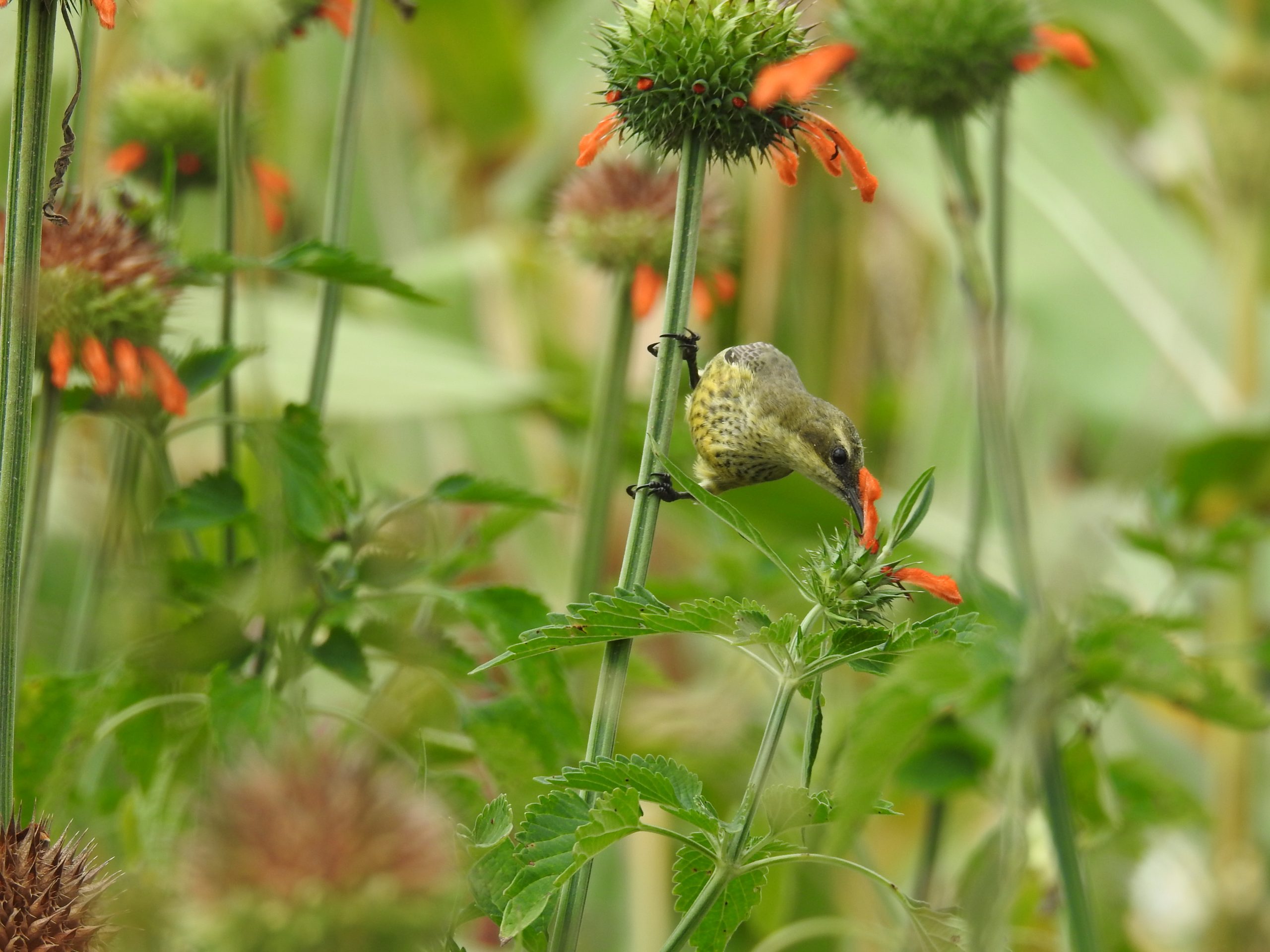
These findings are important for communities like Arusha, where birds such as weavers, sunbirds, hornbills, doves, and kingfishers can become part of everyday outdoor learning and healing experiences.
But Isn’t This Just for Wealthy Countries?
Absolutely not. The evidence spans Iran, Brazil, the UK, India, and the USA. In each context, the barriers are the same: rigid curricula, lack of teacher training, limited outdoor space, and parental fear. And the solutions are the same: simple, low-cost, school-based bird programs.
In Iran’s Mazandaran province a green, forested region like parts of northern Tanzania researchers found that even in rural schools with abundant nature, schoolyards were asphalted with just 2-3 trees. Children wished for wood, stone, and grass to play on. In the same study in Iran, a teacher shared an incredible story:
“I have an 8-year-old student, who used 7 pills per day to control his hyperactivity… but after being in nature school for just 5 months, his doctor stopped the medications.”
Your child is no different. They crave the same things.
A Call to Action:
As the Welsh educator Richard Dunne put it: “If people don’t know about, understand, or love nature, they are not going to care for it.”
We are not fighting against screens or cities. We are fighting for something simpler: a childhood where a child knows the name of the bird at her window, where a boy can climb a tree without a GPS bracelet, where blackberries are picked from a bush, not a packet.
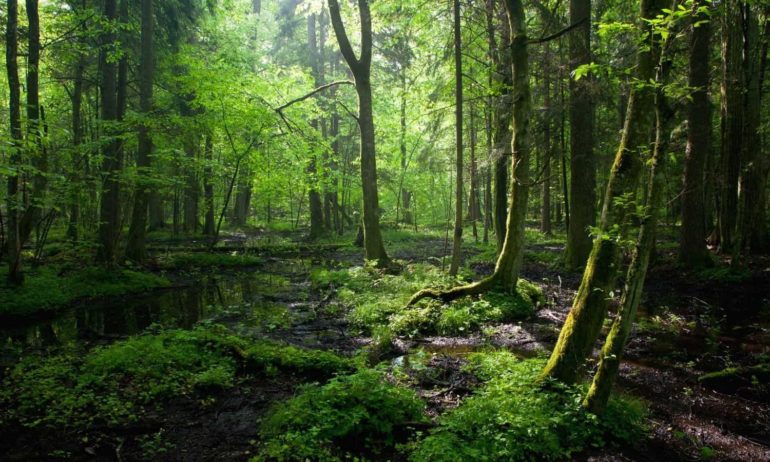
Arusha still has green spaces. Our forests, though threatened, still hold incredible birds. But if this generation never learns to love them, who will protect them?
Join us.
- Sign up for a “Family Bird Walk” this Saturday at our local park.
- Donate old binoculars to our Lending Library.
- Bring our program to your child’s school.
The concrete and chaos of modern Arusha will not disappear. But we can inoculate our children against Nature-Deficit Disorder by giving them the one thing that is still abundant here: Life in the sky.
Let’s help our kids grow roots, even in the city.