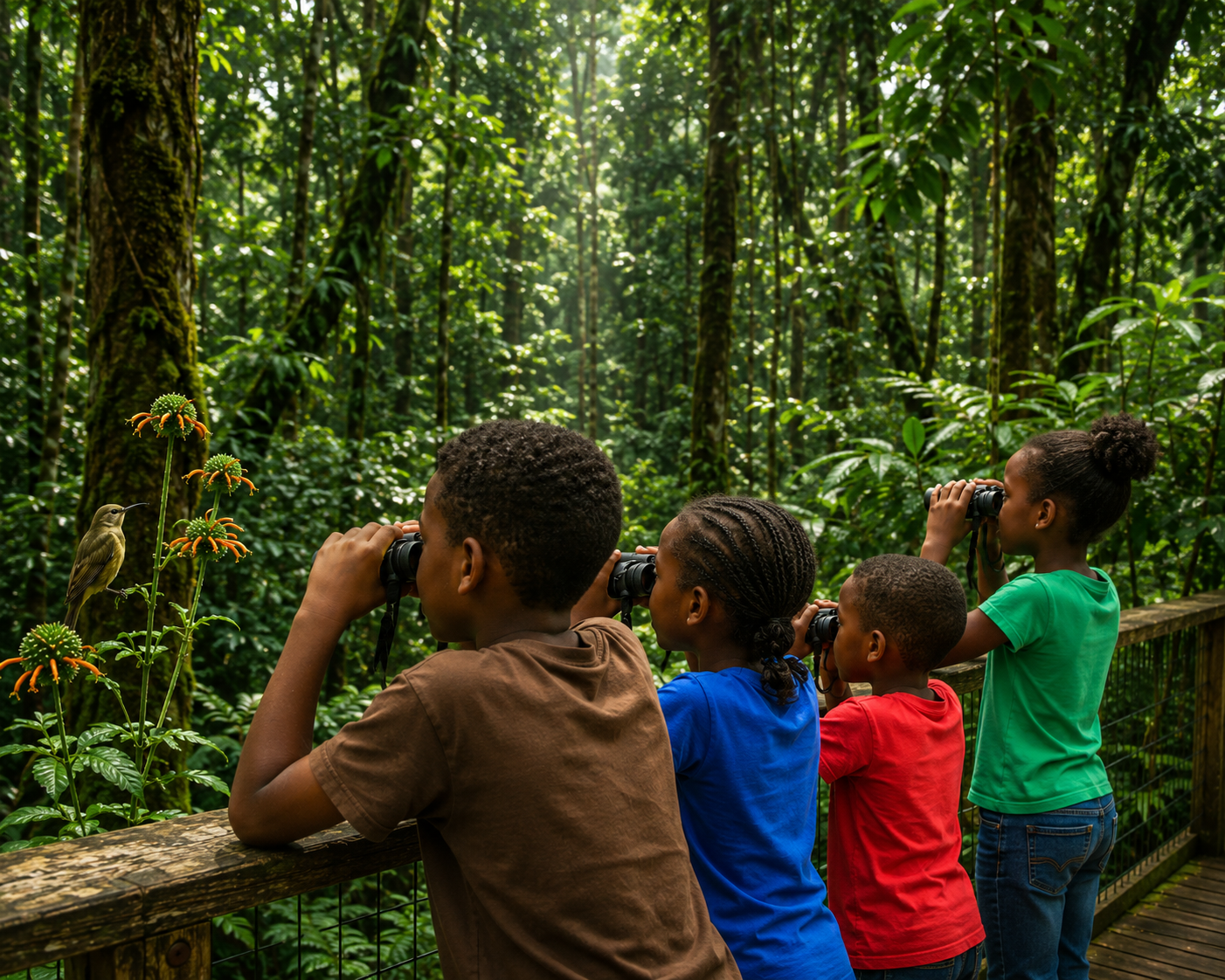
Hey, nature explorers! 🌞
Have you ever seen a flower that looks like a lion’s ear? And a bird that sparkles like a living jewel?
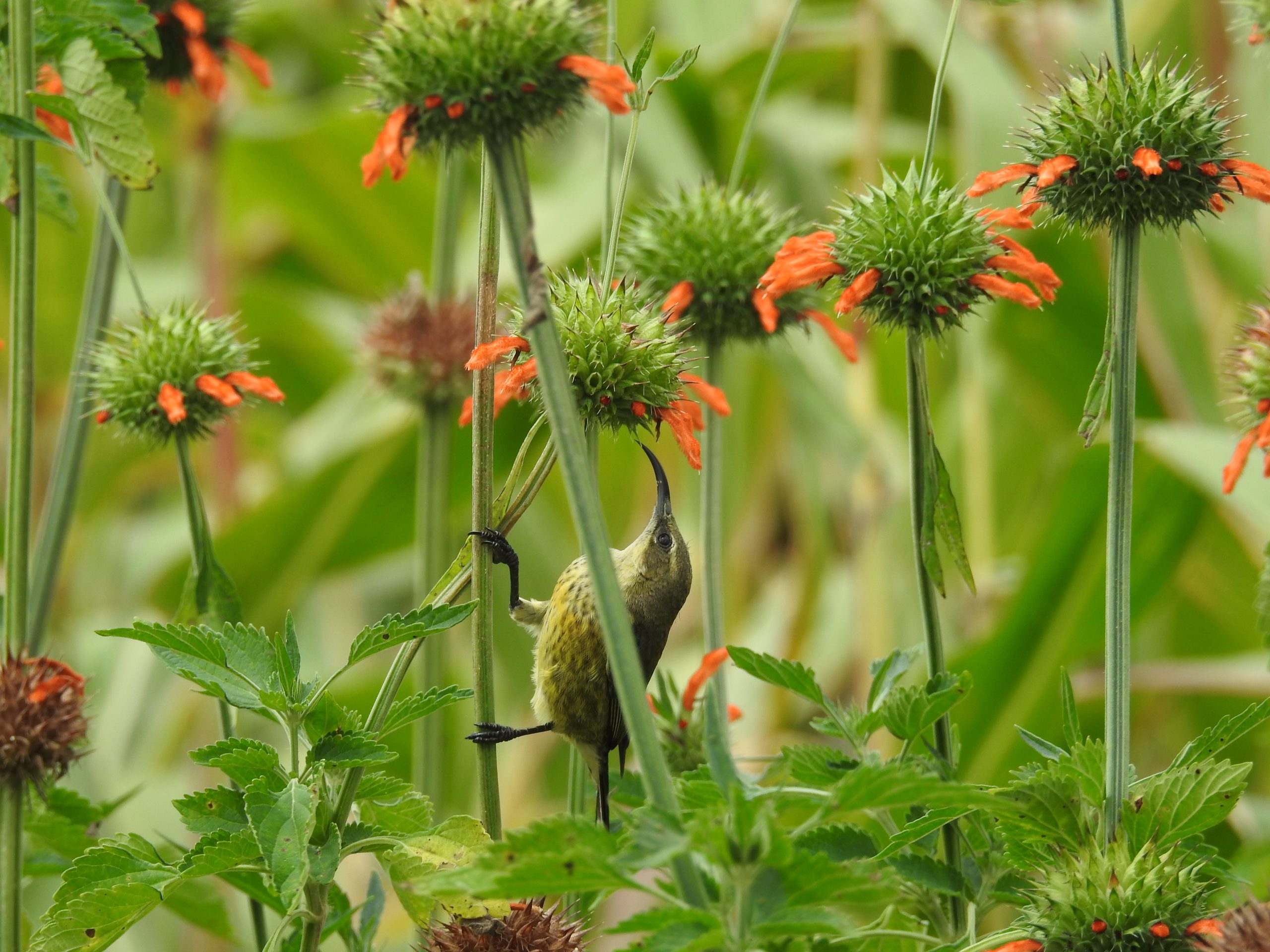
Meet two best friends in the wild: the Mariqua Sunbird and the Lion’s Ear plant (scientists call it Leonotis nepetifolia – but let’s stick with Lion’s Ear).
Their friendship is one of nature’s coolest “you help me, I help you” stories. Ready to dive in?
Meet the Mariqua Sunbird
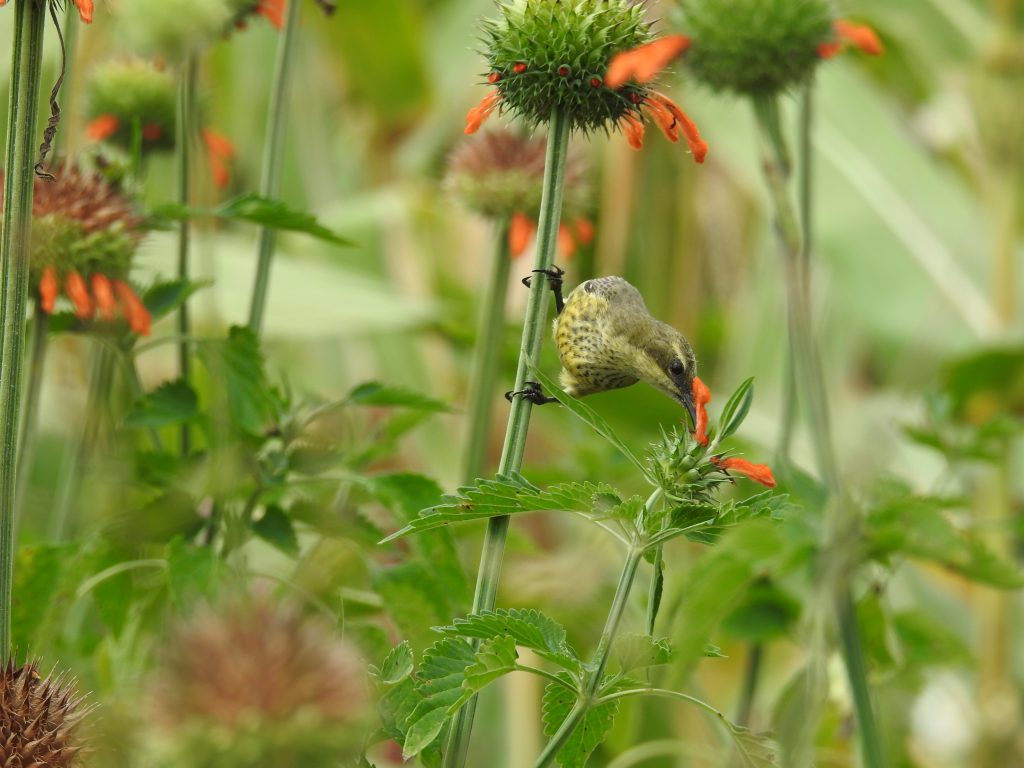
This little guy is a show-off (in the best way). The male has a shiny green and purple chest that glows in the sun. His beak? Long and curved – like a perfect drinking straw. The female is more plain brown, but she’s a super mom who needs lots of energy to raise babies.
Meet the Lion’s Ear Plant
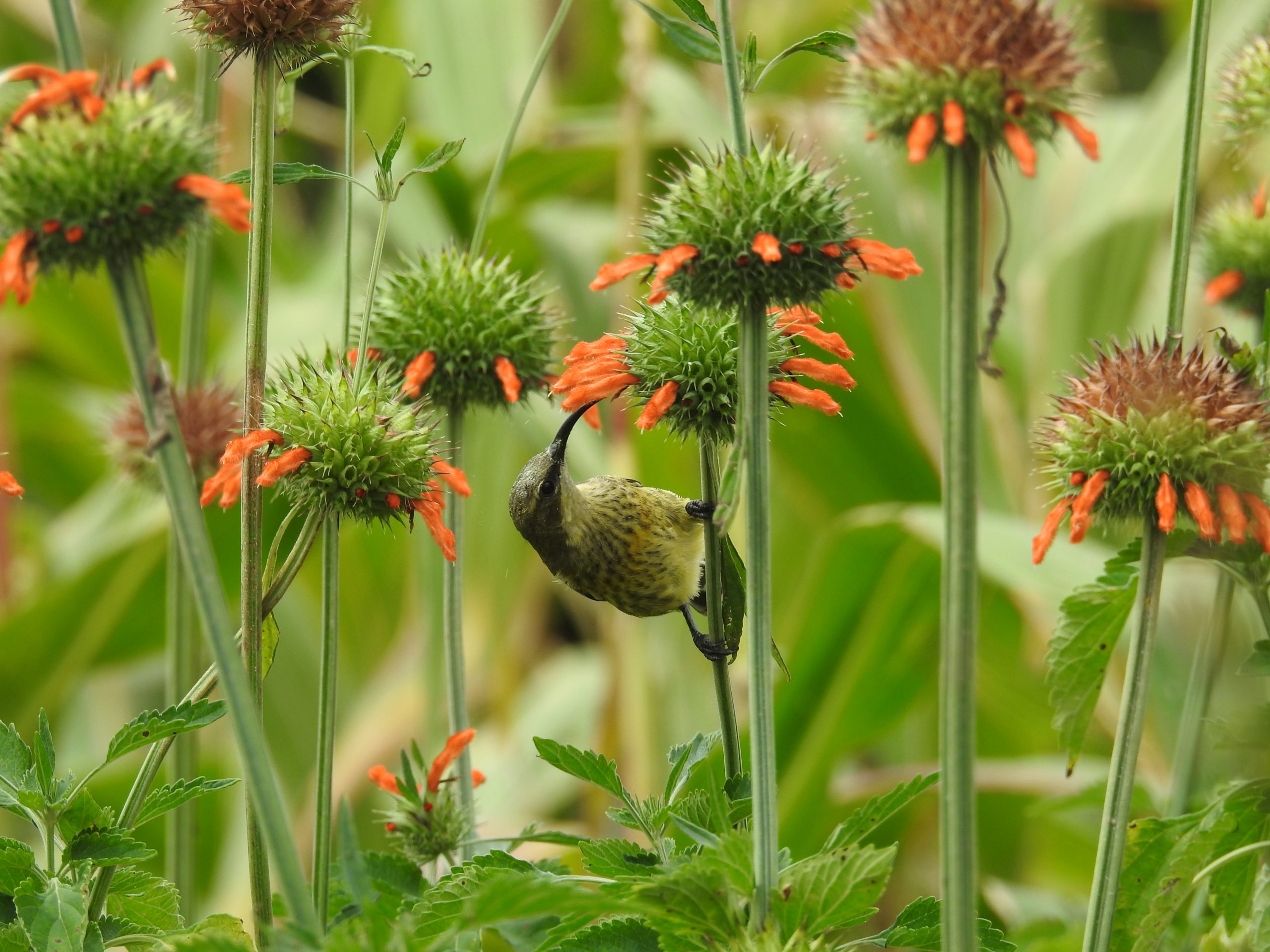
This plant grows taller than you up to 2 meters (that’s as high as a door!). It has fuzzy, bright orange flowers that grow in round balls, stacked up the stem like fluffy tower floors. People named it “Lion’s Ear” because each flower cluster looks a bit like a lion’s fuzzy ear! 🦁
What’s the Secret Between Them?
Here’s the magic:
The sunbird loves sweet nectar. The lion’s ear loves to make seeds.
But the lion’s ear can’t just walk over to another flower. It needs a delivery service.
That’s where our jewel-bird comes in!
The sunbird zips over, sticks its long beak inside the flower, and slurps up the sugary drink. While drinking, its forehead gets dusted with sticky yellow pollen. Then zoom – it flies to the next flower. Some of that pollen rubs off.
And just like that: new seeds are on their way!
Scientists Have Proof!
This isn’t just a story. Grown-ups in lab coats have studied it.
-
A 1994 study in Plant Systematics and Evolution found that the nectar inside Lion’s Ear flowers has a special sugar recipe called “hexose-dominant”.
Translation: It’s like sunbird fast food exactly what these birds crave. -
Other scientists (Gill & Conway, 1979) watched sunbirds in East Africa visiting Lion’s Ear flowers again and again. They even saw other close cousins of the Mariqua Sunbird doing the same thing.
That means: if you’re a shiny sunbird and you see an orange Lion’s Ear, you know a tasty reward is waiting. -
Birdwatchers in Tanzania also reported spotting a Mariqua Sunbird hanging out where other sunbirds were feeding on Leonotis flowers. Same place, same plant family same awesome friendship
What’s the Takeaway?
This is what scientists call a mutualism a fancy word for “teamwork makes the dream work.”
The sunbird gets a free smoothie. The plant gets a flying pollen delivery.
Both win. Every time.
Next time you see a bright orange flower, watch closely.
Do you see a tiny, shiny bird with a long beak?
If yes – you just spotted one of nature’s best friendships in action.
Stay curious, stay wild, and don’t forget to say thanks to the sunbird next time you see a beautiful flower blooming.